
Canada must play to win: From the Arctic to our economy, participation is no longer enough.
For a few hours in February, as both our men’s and women’s hockey teams played for gold, the entire country was filled with a deep and palpable desire to win. As part of our national fabric, losing in hockey feels unacceptable and winning feel collective. It is also something we understand – the rules, the opponents, the stakes – and it’s also something we seek to be not just good at, but to dominate.
Off the ice, our collective mindset and language shift. We speak of resilience, consultation, and risk mitigation. We are careful with words like “dominance” or “victory”. We settle for “good enough”.
Evidence of this collective complacency abounds: Canada’s productivity lags key peers. Business investment per worker trails the United States. Research strength has not consistently translated into globally scaled industrial champions. These are signs of a country comfortable participating rather than leading. Passive participation, however, is not just insufficient; it is a reliable path to diminished sovereignty.
What then would it mean for Canada to win? What are we going to choose to dominate? How do we get a country of our scale and geography to adopt a winning mentality not just on the ice, but across industry, technology, and national strategy?
Answering these questions begins by recognizing, and openly stating, that the ruptured world order is operating less like a hockey game and more like a street fight. There is no referee, few if any rules, and unpredictable opponents. When you find yourself in a fight, there is no option other than winning.
This is a lesson, and a mindset, that I trained and lived during my time in special operations. Surrounded by a group of likeminded Canadians, I was trained and selected to execute under conditions where ambiguity is a liability, hesitation is fatal, and second place does not exist. That mindset does not leave you. It is not a tactic—it is a standard. When I transitioned from the military to building ONE9, I brought that standard with me. Participation is not a strategy, for an operator, or for a country. If you are not serious about winning, you are accepting someone else's terms.
The lesson is not that Canada must win at everything. But we must cultivate the capacity to win where we choose to compete. Winning in this sense means setting standards, owning critical infrastructure, controlling intellectual property, anchoring supply chains, and dictating tempo. It means being indispensable rather than replaceable.
The Arctic is one such place. It should not be the only one.

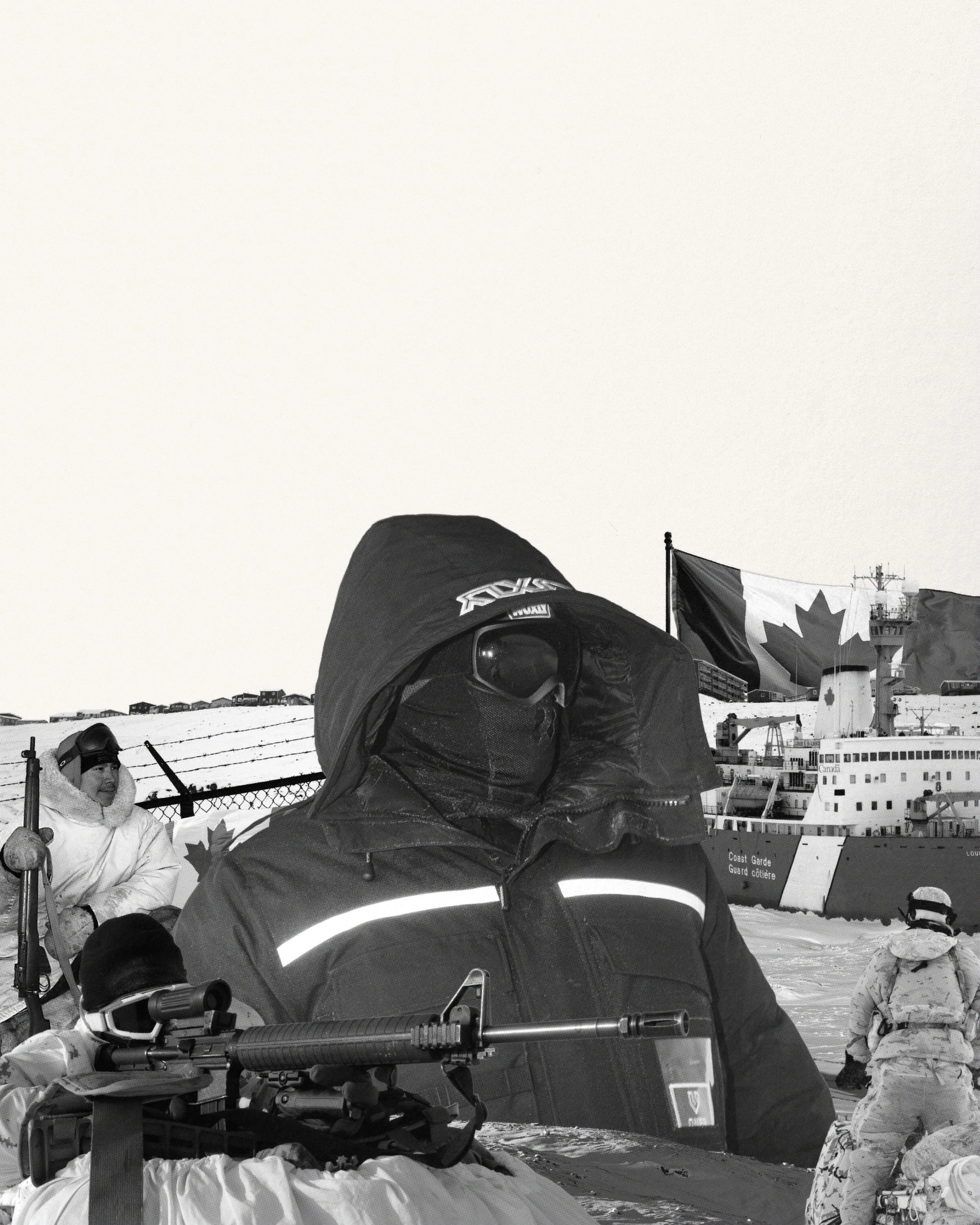
IMG // Jeremy Constantineau, ONE9The Arctic concentrates many of the hardest questions of sovereignty in a single geography. It tests domain awareness, logistics, communications, energy resilience, and sustained presence in extreme conditions. It is central to our geography and identity. And it is unforgiving.
This reality is focusing our national attention. Ambitious entrepreneurs and private capital are increasingly converging on the Arctic not because it is fashionable, but because it is hard. Together, we are building new sensing platforms, autonomous systems built for extreme conditions, resilient communications, and infrastructure capable of operating at the limits of climate and distance. From the vantage points of building companies and deploying capital, the pattern is unmistakable: hard problems are attracting serious builders.
Winning in the Arctic, however, is not simply about geography. It is about mindset. A country that cannot adopt a winning posture where the stakes are most visible will struggle to adopt it anywhere else. The habits that produce dominance in the North, such as clarity of purpose, concentration of effort, and tolerance for risk, are the same habits required to compete in advanced manufacturing, artificial intelligence, energy systems, and critical infrastructure.
The Arctic is therefore not just a strategic region. It is a test of whether Canada can recover a broader habit of winning. Canada must now carry that mindset into every arena that shapes our future. At ONE9, we are actively looking for founders and companies who share this conviction—builders who are not playing for participation, but for first place. Not just first place in Canada, but first place in their vertical, globally. We back the ones who have decided to win, who are building with the clarity, urgency, and execution discipline that dominance requires. If that describes you, we want to hear from you.
Canadians understand what it means to play to win when the puck drops. We now call upon our fellow builders and dreamers across the country to bring that same expectation of victory to the arenas that will determine our sovereignty and prosperity.